The Father Revealed
Bereshit foundation — who is this Elohim?
Creator of All Things
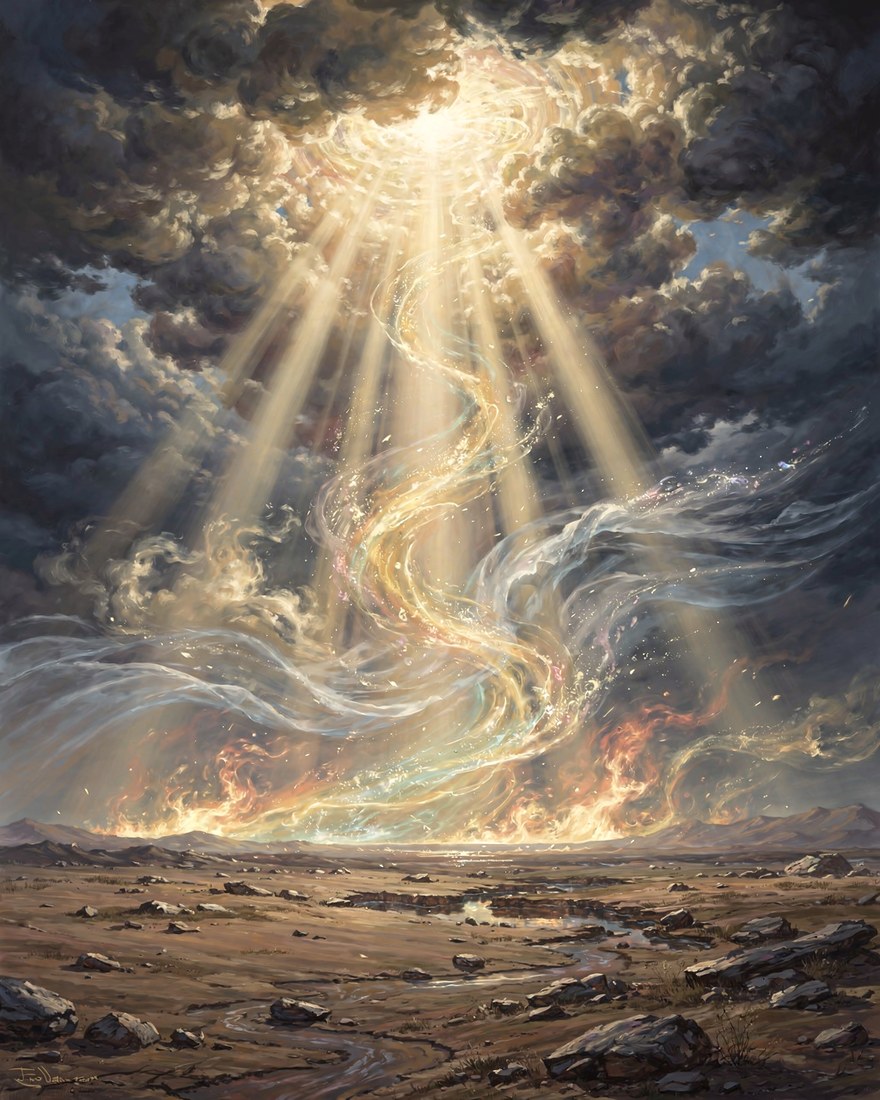
Read the first chapter for its rhythm and one movement keeps returning. Elohim said, and it was so. There is no struggle in between. No material is wrestled into shape, no rival pushes back, nothing resists. The gap between what He speaks and what exists is nothing at all. Then watch what He does with the light on the first day. He divides it from the darkness and gives both a name, and naming is the work of an owner. By the end of the sixth day everything that exists has been spoken, looked at, and called good by the One who made it. Nothing in the account arrives by accident and nothing arrives unsupervised. That is the ground the rest of Scripture stands on. The Elohim who later speaks to Abraham and to Moses is the same One whose word alone turned emptiness into a world.
Order from Chaos
Verse two states the problem in two words. The earth was formless and empty. Now watch how those two words get answered in order. The first three days make form. An expanse divides the waters. Dry land appears out of the sea. Plants and trees are set into the ground. Nothing is filled yet; spaces are being shaped. Then the next three days fill what was shaped. Lights are set in the expanse. Creatures swarm the waters and birds cross the sky. Animals cover the land, and then a man and a woman. Every filling lands in a place already prepared for it. He does not populate what He has not first structured. That is worth holding on to when a season of your own life feels like preparation with nothing yet in it. Emptiness that has been given a shape is not the same thing as chaos.
Image of Elohim
Everything else in the chapter is made after its kind. The trees after their kind, the birds after their kind, the animals after their kind. Then the pattern breaks. Elohim does not make the man after his own kind. He makes him in His image. That single change of phrase sets one creature apart from every other on the page, and it is said before the man has done anything at all. No work stands behind it, no obedience, no achievement. Now put Tehillim 8 beside it. Its writer looks up at the moon and the stars and asks the honest question: what is man, that you think of him? The answer is not that man is large. The answer is that he was crowned. Dignity here is conferred before performance, and it is conferred on every person in the account rather than on a chosen few.
Authority over Creation
Dominion is a word that has been badly used, so let the sentence itself define it. YHWH Elohim took the man, and put him into the garden of Eden to cultivate and keep it. Two verbs. Cultivate is work that makes something grow. Keep means guard, watch over, protect. Both describe a gardener, and a gardener holds real authority over ground he did not make and does not own. He can plant it or he can strip it. Nothing in the sentence licenses ruin. Notice also that the man is placed. He does not choose the garden and he does not build it. He arrives in something already planted, already watered by a river, already called good. Whatever authority you carry over work, over people, over a home, it began as ground handed to you by Someone else, to be worked and guarded rather than used up.
Shabbat Rest
Look at what actually gets blessed in this account. Not the sea creatures only, though they are blessed. Not the man and the woman only, though they are blessed too. The last thing blessed is a day. Elohim blessed the seventh day, and made it kodesh, because he rested in it from all his work of creation which he had done. Before any altar, before any mountain, before any building set apart for worship, the first thing in Scripture called kodesh is a stretch of time. And the reason given is not tiredness. The work was finished. He stopped because it was done, not because He was spent. So the seventh day sits at the end of the account as a completed thing waiting to be entered, and every Shabbat since is a return to a rest that was finished before anyone was asked to keep it.
The First Command
Count what is permitted before you count what is not. You may freely eat of every tree of the garden… Every tree. The permission comes first, it is spoken generously, and it covers almost everything in sight. Only then comes the single exception: but you shall not eat of the tree of the knowledge of good and evil… One tree withheld out of a whole garden given. That ratio matters, because the serpent will invert it in the very next chapter. Listen to how he opens. Has Elohim really said, ‘You shall not eat of any tree of the garden’? He takes a wide yes with one boundary inside it and hands it back as a flat no. That is the oldest distortion there is, and it works by making generosity sound like restriction. Read the actual command before accepting anybody's summary of it.
When Relationship Breaks
Notice the order in which things break. The fruit is eaten, the eyes are opened, and the first instinct is not to run away but to hide, to put leaves and trees between themselves and the One who made them. Shame rarely drives a person away from Elohim altogether; it makes a person avoid Him while staying near enough to hear Him walking. Then Elohim comes into the garden, and His first recorded word after the fall is not a sentence but a question: Where are you? He was not short of information. The question was a door held open, a chance to step out and be seen. The man half took it, then blamed his wife; she blamed the serpent. Hiding and blaming are still the two oldest reflexes of guilt. And the question has not changed. It is still an invitation, not a trap.
Promise in the Curse
Notice who is being spoken to when the promise arrives. Elohim turns to the serpent first, and it is there, inside a curse aimed at someone else, that the words fall. I will put hostility between you and the woman, and between your offspring and her offspring. He will bruise your head, and you will bruise his heel. The man and the woman are standing there hearing it. Nobody has addressed them yet. They overhear their own rescue announced as a sentence passed on their accuser. Then look at the last thing that happens before they leave. YHWH Elohim made garments of animal skins for Adam and for his wife, and clothed them. The fig leaves they had sewn were replaced. Something died so that they could be covered, on the same day, by the hands of the One they had been hiding from.