Mitzrayim
Out of bondage, through the waters, into freedom
Let my people go, that they may serve me.
Shemot 9:1
The family became a people, and the people became slaves.
Generations passed in Mitzrayim. The household of seventy grew into a multitude, and a new king arose who did not remember Yosef. Afraid of how numerous they had become, he crushed them under forced labour and ordered their baby boys drowned in the river. This is the world the Story keeps insisting is real — a world where the strong grind the weak, where empires build their glory on broken backs, where it can look for a long time as though the Father has forgotten His promise.
He had not forgotten. Elohim heard their groaning, and He remembered His covenant with Avraham, Yitzhak, and Yaakov, and He saw, and He knew. Those four verbs are the turning of the Story: heard, remembered, saw, knew. The Father is not distant from the cry of the oppressed; He bends down to it.
He raised up a deliverer in the most unlikely way — a Hebrew boy drawn from the very river meant to kill him, raised in the palace of the king who hunted his people, then exiled for forty years as a shepherd. To this man, Moshe, Elohim spoke from a bush that burned without being consumed, and gave His own name: I AM WHO I AM. YHWH sent Moshe back to the most powerful man on earth with a single demand: let my people go, that they may serve me.
What followed was a contest between the gods of Mitzrayim and the living Elohim — plague upon plague, each striking at something the empire trusted, until only the last remained. And here the heart of the whole Story shows through. On the final night, each household was told to take a lamb without blemish, to kill it, and to paint its blood on the doorposts. Where the blood was, death would pass over; where it was not, the firstborn would die. Rescue came not by being stronger or better, but by sheltering under the blood of a lamb the Father Himself appointed. They ate it dressed to leave, in haste, and Elohim brought them out that night with a high hand.
Pesach. The night is remembered ever after, because it is the pattern of every rescue the Father performs. Generations later, on the night He was betrayed, Yeshua took the Pesach bread and cup and said, this is my body, this is my blood — telling His friends that the lamb had always been pointing at Him. He is the Lamb without blemish; His blood on the doorposts of a life is what death passes over. The exodus is not only history. It is the Besorah rehearsed in advance.
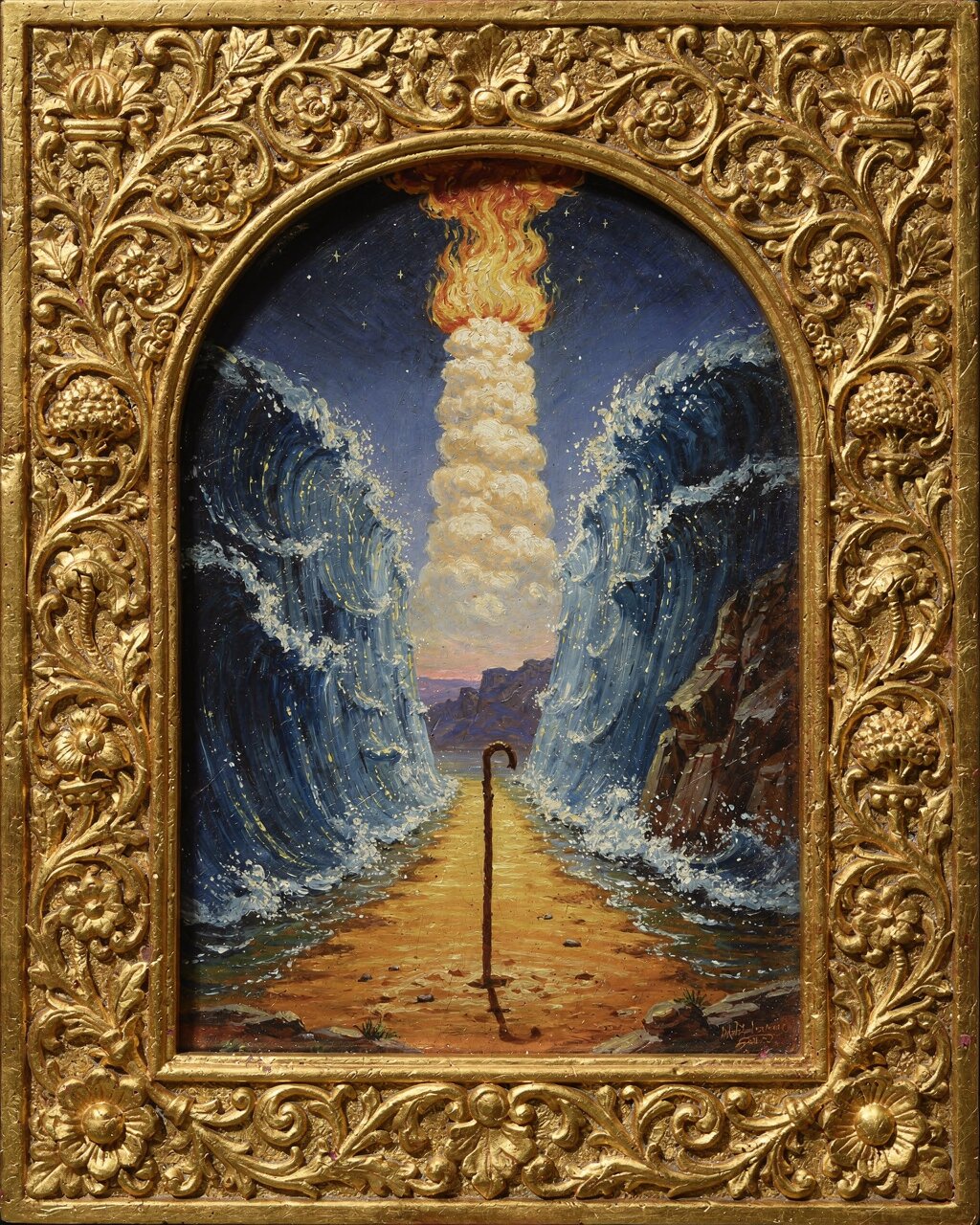
Pharaoh let them go and then changed his mind, and the people found themselves trapped against the sea with the chariots of Mitzrayim thundering behind. There was nowhere to run. And Elohim opened the water, and they walked through the sea on dry ground, and the army that pursued them was swallowed when the waters returned. Rescue by blood at the door, and then through the water to the other side — brought out, brought through, set free. On the far shore they sang the first song of salvation in the Story.
But notice where they were when the song ended: free, and standing in a wilderness, with no food but what Elohim sent each morning and no water but what He drew from rock. Freedom was the beginning, not the end. They had been brought out of slavery so that they could be brought to the Father Himself — let my people go, He had said, that they may serve me. The chains were off. Now they would learn what they had been freed for, and Who had freed them. The Lamb had a destination in mind, and it was the Father's own presence.