New Creation
The story bends home — every tear wiped, all things made new
Behold, I am making all things new.
Hitgalut 21:5
The Story is not finished, and Yeshua told His people how it ends.
He promised He would come again — not in hiddenness this time, not as a child in a feeding trough, but openly, in glory, with every eye seeing Him. The last book of Scripture, Hitgalut, pulls back the curtain on that day and on the end of all things, and it does not show a philosophy or a force on the throne of the universe. It shows a Lamb — the same Yeshua, still bearing the marks of His death, now reigning over everything. The One who was slain is the One who holds the centre of heaven, and around Him a multitude no one can count, from every nation, tribe, people, and tongue, singing that He is worthy. This is where the Father has been leading the whole time: not to a place, but to His Son, glorified, with a people gathered around Him out of every corner of the broken world.
There is a reckoning. The Story has never been sentimental about evil, and it does not flinch at the end. Everything that wars against the Father and crushes His creation is finally and fully judged. The serpent who whispered in the garden, who has prowled through every movement since, is thrown down for good. And then the last enemy, the intruder that entered when the world broke, is itself destroyed: death is thrown down, and there is no more of it. The wound the Seed took at the gate is healed, and the head of the serpent is crushed beyond repair.
What rises in its place is not an escape from the world but the world made new. A new heaven and a new earth — the old creation not discarded but redeemed, washed, and raised, as Yeshua's own body was raised. And the loud voice from the throne says the thing the whole Story has been straining towards since the cool of the day in the garden: behold, Elohim's dwelling is with people; and he will dwell with them, and they will be his people, and Elohim himself will be with them as their Elohim. He will wipe away every tear from their eyes. Death will be no more; neither will there be mourning, nor crying, nor pain any more. The first things have passed away. The distance that opened in the Fall is closed forever, face to face — Father and children, with nothing left between them.
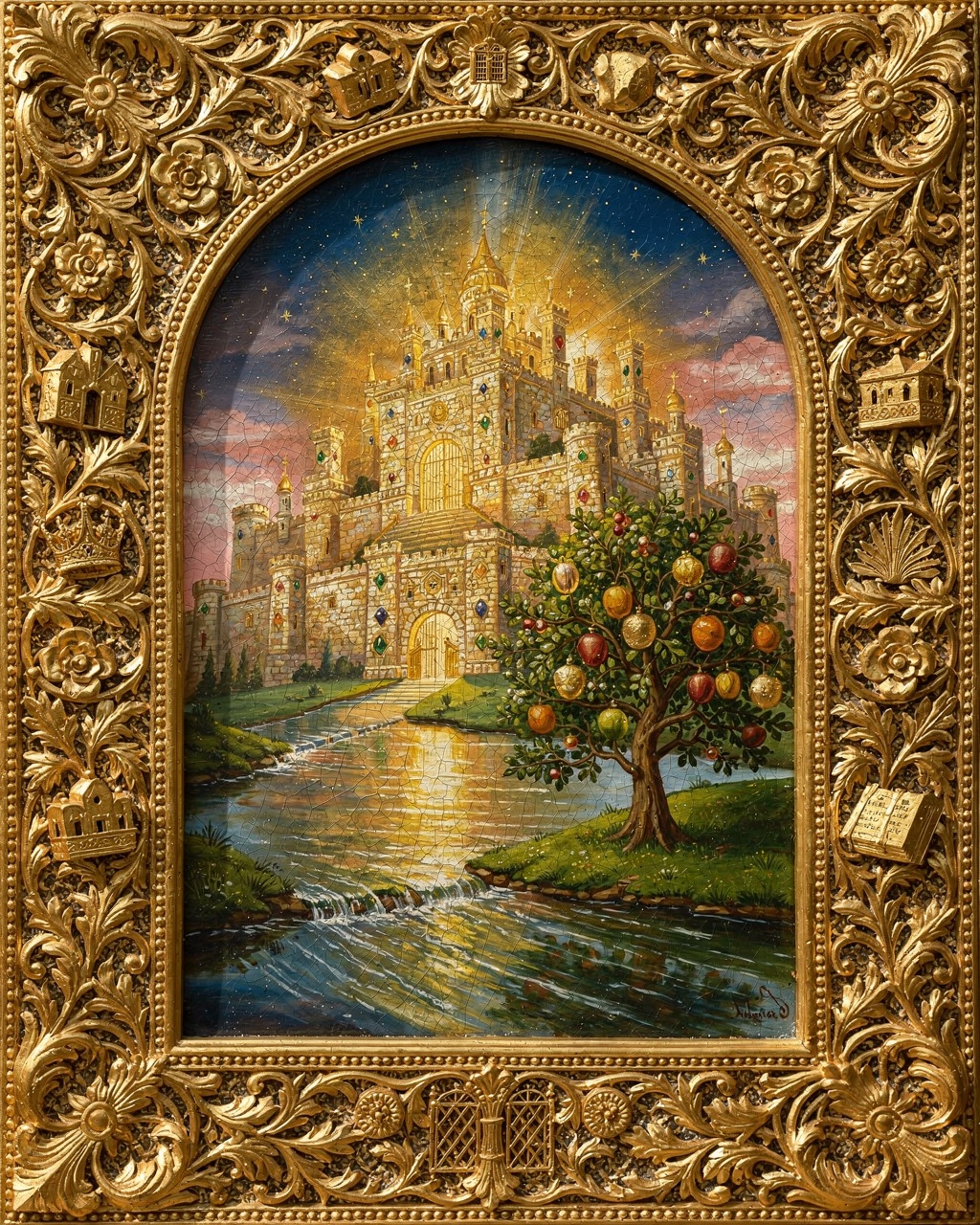
And look at the place itself. The garden lost at the beginning comes back, gathered up into a city — the tree of life is there again, its leaves for the healing of the nations, and the river of life runs clear, and there is no more curse. There is no temple in it, because Elohim and the Lamb are its temple; and no sun, because the glory of Elohim is its light, and the Lamb is its lamp. Everything the Mishkan and the house only sketched in shadow stands now in full daylight: the Father with His people, and His Son in the midst of them, with nothing in between.
The One who sits on the throne says, behold, I am making all things new — the same voice that said let there be light, speaking the world new from end to end. And the Son says, behold, I am coming soon. He is the Aleph and the Tav, the beginning and the end, the One who was there in the first sentence of Bereshit and is there in the last sentence of Hitgalut, holding the whole Story together in Himself.
And the very last word is not a command but an invitation. The Spirit and the bride say, Come. Let the one who is thirsty come; let whoever wishes take the water of life freely. That is where the Story has been going the whole time — not merely to explain the world, but to open a door and call you through it, home to the Father, through His only born Son. You are about to begin at the beginning, in a good garden under a good word. Carry this with you to the first page: every promise, every lamb, every throne, every prophet's aching hope, and the empty tomb at the centre of it all, is held together in Yeshua — and the last thing He says is, Come.