Torah
The mountain trembles — Elohim gives His word, and a people is set apart
You shall be to me a kingdom of priests and a kodesh nation.
Shemot 19:6
The Father brought them out so that He could bring them near.
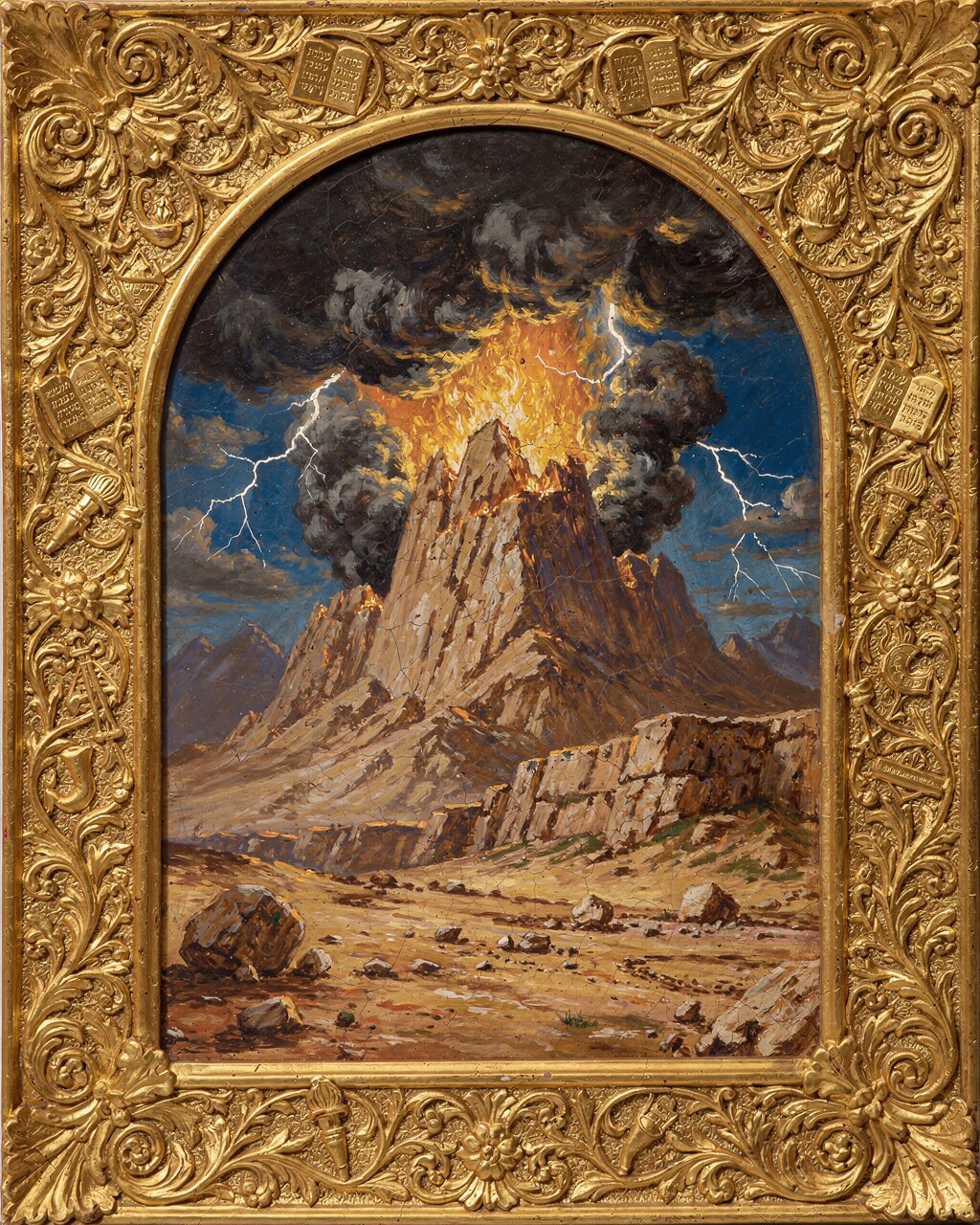
Three months out of Mitzrayim they came to a mountain, and Elohim came down on it in fire and cloud and thunder, and the whole mountain trembled. From the fire He spoke His instruction — the Torah — beginning with the words that frame everything else: I am YHWH your Elohim, who brought you out of the land of Mitzrayim, out of the house of bondage. The commands come after the rescue, never before it. The Father does not say, keep these and I will save you; He says, I have saved you, and here is how a free people lives. The Torah is not a ladder to climb up to Elohim. It is the shape of life with the Father who has already come down.
And what He gives is good — a gift, not a burden. Love YHWH your Elohim with all your heart. Do not kill, do not steal, do not betray, do not covet. Care for the widow, the orphan, the stranger, the poor. Keep the seventh day and rest, as Elohim rested. Be kodesh, He told them, because I am kodesh. The Torah holds up a true picture both of the holiness of the Father and of the gap between that holiness and the human heart. It shows the people the height they were made for, and how far they fall short of it.
So Elohim did the most astonishing thing in the whole movement: He moved in. He gave the pattern for the Mishkan, a tent at the centre of the camp, and His glory came down and filled it. The Father who walked in the garden, and who had seemed so far off in the years of slavery, now pitched His tent in the middle of His people and travelled with them. The whole point of the exodus arrives here — not a land, not a law, but the presence of the Father dwelling among them.
But a set-apart Elohim dwelling among an unholy people is no small thing, and the Torah does not pretend otherwise. So it gave the sacrifices: an animal brought, a hand laid on its head, the life given in the worshipper's place, the blood carried in. Without the shedding of blood there is no forgiveness. Once a year, on Yom Kippur, the high priest entered the innermost place with blood to cover the sins of the whole people. Day after day, year after year, the altar ran red — a constant, aching reminder that sin costs a life, and that these lives could only cover, never finally cleanse.
Every part of it was a shadow thrown forward from something still to come. The priest who stands between Elohim and the people points to a better Priest, Yeshua, who needs no sacrifice for Himself. The lamb on the altar points to the Lamb of Elohim. The tent where the glory dwelt points to the only born Son who would one day make His dwelling among His people in flesh, full of grace and truth. The whole system was honest about the problem and patient about the answer: it kept saying, not yet, not this, not finally — until the One it pointed to arrived and offered Himself once for all.
The wilderness years exposed the people's hearts. They grumbled, they made a golden calf while the fire still burned on the mountain, they refused to trust the Father at the border and wandered forty years until a generation had passed. And yet even their failures were made to preach. When venomous snakes came among them, Elohim told Moshe to lift a bronze serpent on a pole, and everyone who looked at it lived. Centuries later Yeshua would say: as Moshe lifted up the serpent in the wilderness, even so must the Ben Adam be lifted up, that whoever believes in him should not perish, but have eternal life. Even in the desert, the cross was being sketched against the sky. The Torah could shelter and shape a freed people, but it could not finally heal them. It was always pointing past itself, towards the only born Son.